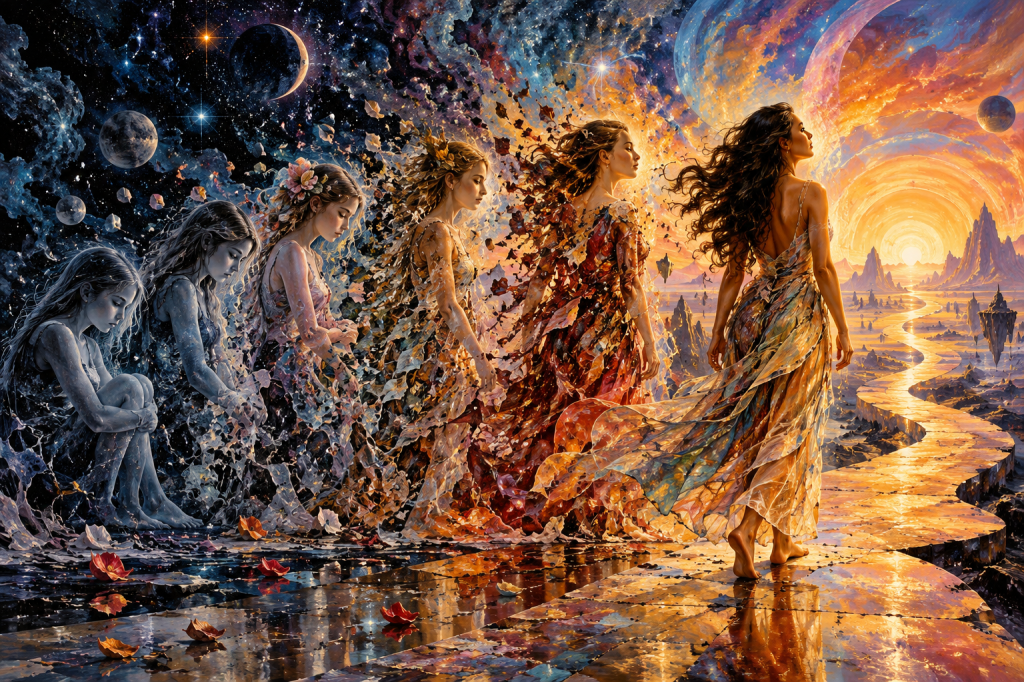
Exploring the invisible deaths we experience throughout life.
Have you ever looked back at an old photograph of yourself and felt like you were staring at a complete stranger?
You recognize the face, the smile, maybe even the clothes you were wearing. You remember where you were and who you were with. Yet something about that person feels distant. They had different dreams, different fears, and an entirely different understanding of the world.
That person was you. But at the same time, they no longer exist.
Throughout our lives, we experience countless transformations. Some happen gradually, while others arrive unexpectedly and change everything we thought we knew about ourselves. We rarely recognize these moments as they’re happening, but with every experience, something within us changes.
And sometimes, becoming someone new means saying goodbye to someone we used to be.
The Invisible Deaths We Experience
When we think about death, we usually imagine the end of physical existence. But there is another kind of ending that happens throughout our lives.
The ending of an identity.
Think about the person you were five years ago. What did they believe? What made them happy? What were they worried about? Who did they imagine they would become?
Chances are, some of those things no longer matter to you.
Perhaps you once believed happiness came from being accepted by others. Maybe you chased a dream that eventually lost its meaning. Or perhaps you experienced something that completely changed how you see relationships, love, or even yourself.
These changes represent the quiet endings of former identities.
We don’t hold funerals for these versions of ourselves. We don’t always recognize when they’ve disappeared. One day, we simply realize that we no longer think, feel, or behave the way we once did.
And life continues.
Why We Sometimes Miss Who We Used to Be
There’s a strange kind of nostalgia that comes with personal growth.
Sometimes we miss the person we were before life taught us certain lessons.
We miss the innocence of not knowing how complicated things could become. We miss the excitement of dreams we hadn’t yet questioned. We miss the simplicity of seeing the world through eyes that hadn’t experienced certain disappointments.
But are we truly missing our former selves, or are we missing how life felt during those moments?
It’s an interesting distinction.
We often romanticize the past because we remember its emotions more vividly than its difficulties. We forget that the person we used to be was also searching for answers, struggling with uncertainty, and hoping to become someone different.
The version of you that you sometimes wish you could return to might have been wishing for the life you have today.
Growth Doesn’t Always Feel Like Growth
We tend to imagine personal growth as something beautiful and inspiring.
A moment of clarity. A sudden realization. A peaceful transformation into a wiser version of ourselves.
But growth isn’t always comfortable.
Sometimes growth feels like confusion. Sometimes it feels like loneliness. Sometimes it involves losing interest in things that once defined us.
You might find yourself questioning beliefs you’ve held for years or feeling disconnected from environments that once felt familiar.
This can be unsettling because our identities provide a sense of stability. We like knowing who we are, what we believe, and where we belong.
When those things begin changing, it can feel as though we’re losing ourselves.
But perhaps we’re not losing ourselves at all.
Perhaps we’re simply discovering that we were never meant to remain the same person forever.
You Don’t Have to Dislike Your Past to Outgrow It
One of the most beautiful realizations we can have is that personal growth doesn’t require rejecting who we used to be.
You don’t have to hate your past decisions to make better ones today.
You don’t have to feel embarrassed about your former beliefs simply because your understanding has changed.
And you don’t have to criticize an earlier version of yourself for not knowing what you know now.
That person was doing their best with the awareness, experiences, and understanding available to them at the time.
Every version of you played a role in bringing you here.
The confused version. The hopeful version. The heartbroken version. The version that made mistakes. The version that believed everything would work out differently.
They all contributed something.
Instead of viewing our past selves as people we’ve escaped, perhaps we can begin seeing them as people who helped us arrive.
Becoming Without Holding On
There’s something freeing about realizing that we don’t have to preserve every part of our identity.
We can change our minds.
We can discover new interests.
We can let go of old expectations.
We can become people our younger selves would never have imagined.
And we can do all of this without needing to explain our transformation to everyone around us.
The present moment gives us an opportunity to exist beyond the stories we’ve created about ourselves.
We are not limited to our past experiences, our previous mistakes, or the identities we’ve spent years constructing.
We’re allowed to keep becoming.
Perhaps the goal of life isn’t to discover one permanent version of ourselves and hold on to it forever.
Perhaps it’s to remain open enough to recognize that we’re always changing.
A Final Thought
Somewhere in your memories exists a version of you who believed they would always be the person they were at that moment.
They couldn’t have imagined everything you would experience, the people you would meet, or the lessons you would eventually learn.
And yet, here you are.
A continuation of everyone you’ve ever been.
One day, the person reading these words will become another version of you that exists only in memory.
Your perspective will change. Your understanding will deepen. Things that feel important today might eventually become distant memories.
And that’s okay.
We don’t need to cling to who we were, and we don’t need to rush toward who we’re becoming.
We can simply appreciate who we are right now.
Because maybe the beauty of being human isn’t in finding a permanent self, but in learning to love every version of ourselves along the way.