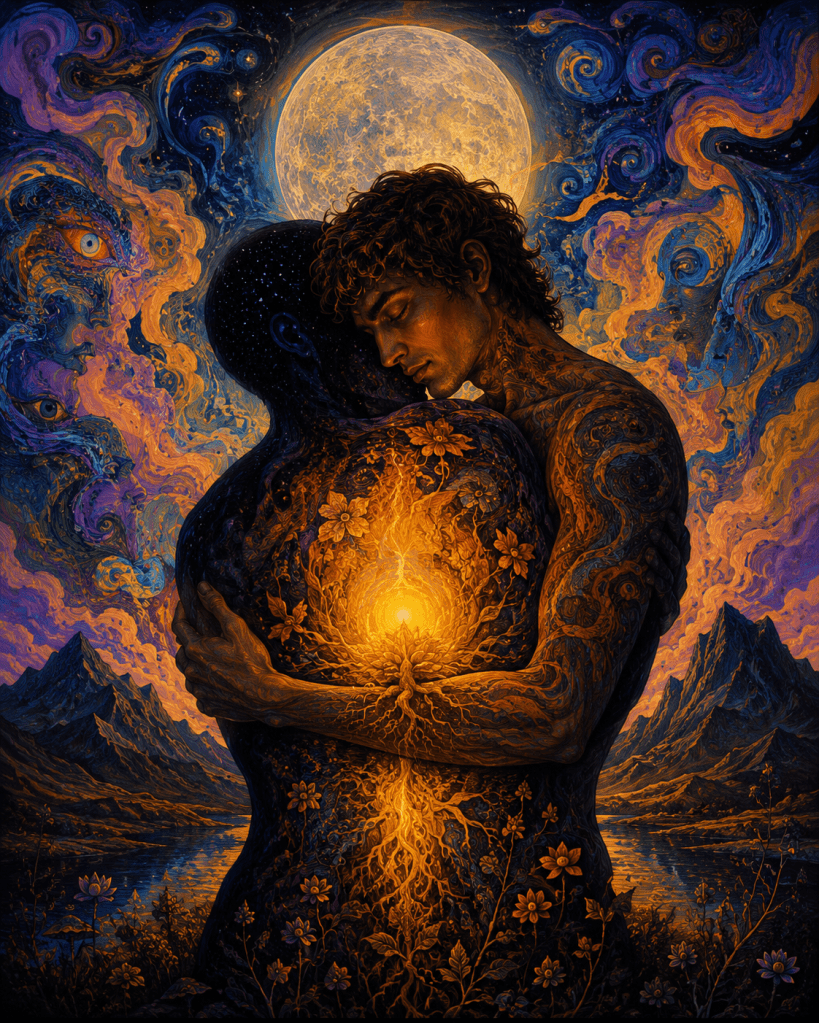
We spend much of our lives trying to become “better” versions of ourselves. We chase positivity, discipline, confidence, and success while quietly pushing away the parts of ourselves we’d rather not acknowledge. The fear, the anger, the insecurity, the jealousy, the grief—we label these as flaws and do everything we can to bury them.
But what if those hidden parts aren’t your enemy?
What if they’re simply waiting to be seen?
The concept of the “shadow,” introduced by psychologist Carl Jung, isn’t about darkness or evil. It’s the collection of thoughts, emotions, and traits we’ve learned to suppress because we believed they weren’t acceptable. Maybe you were told not to cry. Maybe you learned that showing vulnerability was weakness. Maybe you started hiding your authentic self because it felt safer to be who others expected you to be.
Those parts never disappear.
They simply move into the background of your life, quietly influencing your decisions, relationships, and reactions. They show up as emotional triggers, recurring fears, or patterns you can’t seem to break. They aren’t trying to ruin your life—they’re asking for your attention.
Healing isn’t about eliminating your shadow.
It’s about becoming curious enough to understand it.
The next time something deeply upsets you, resist the urge to judge yourself. Instead, pause and ask a different question:
“What part of me is asking to be seen?”
That question changes everything.
Perhaps beneath your anger is a younger version of yourself that never felt heard. Beneath your jealousy may be a longing to create a life that truly fulfills you. Beneath your fear could be an old wound that’s been quietly asking for compassion for years.
Your shadow isn’t asking you to stay stuck in pain. It’s inviting you to become whole.
Real growth doesn’t come from pretending you’ve transcended your humanity. It comes from embracing every part of it. Light without darkness isn’t wholeness—it’s avoidance. When you stop running from the uncomfortable parts of yourself, they gradually lose their power over you.
This doesn’t mean every impulse should be acted upon or every emotion should define you. It means every emotion deserves to be acknowledged before it’s transformed. You can’t heal what you’re unwilling to face.
Ironically, the qualities we admire most in others—wisdom, compassion, patience, authenticity—are often born from people who have walked through their own shadows instead of pretending they didn’t exist.
The path inward is rarely comfortable, but it is honest.
And honesty is where transformation begins.
So the next time you encounter a part of yourself you’d rather hide, don’t turn away. Sit with it. Listen to it. Thank it for surviving what it had to survive.
Your shadow isn’t your enemy.
It’s the forgotten part of you that’s been waiting all along to be welcomed home.