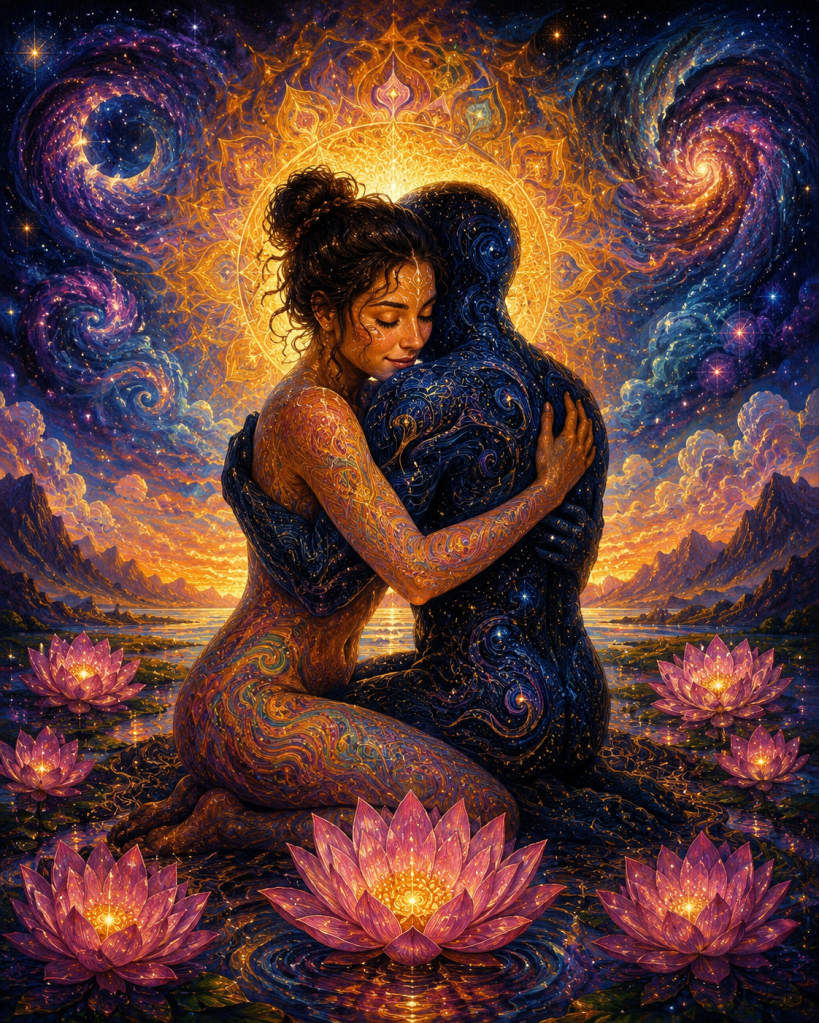
We spend so much of our lives trying to escape ourselves.
When fear shows up, we reach for distractions. We scroll through our phones, stay busy, overwork, seek validation, or convince ourselves that if we ignore the feeling long enough, it will eventually disappear. We treat fear like an unwanted guest standing at the door, refusing to let it inside.
But what if fear isn’t the enemy?
The Vietnamese Zen master Thich Nhat Hanh once wrote:
“When you push away your fear, you are pushing away an aspect of yourself. Embrace it with love.”
That perspective changes everything.
Fear is not separate from you. It is a part of your experience. It may be the frightened child who never felt safe. It may be the heart that still remembers betrayal. It may be the mind trying its best to protect you from getting hurt again.
The problem isn’t that fear exists. The problem begins when we declare war on it.
The more we resist an emotion, the more power we unknowingly give it. Suppressed emotions don’t disappear—they wait. They surface as anxiety, irritability, overthinking, perfectionism, or a constant feeling that something isn’t quite right. We spend enormous amounts of energy trying not to feel what simply wants to be acknowledged.
Healing doesn’t begin by becoming fearless.
Healing begins by becoming curious.
Instead of asking, “How do I get rid of this feeling?” try asking, “What is this feeling trying to show me?”
Fear often arrives carrying a message. Sometimes it’s pointing toward an old wound that still needs compassion. Sometimes it’s inviting you to slow down instead of forcing your way through life. Other times, it’s simply reminding you that you’re stepping into unfamiliar territory—and growth almost always feels unfamiliar.
Meditation has taught me that emotions are like weather. Storms come, storms go, but the sky remains. You are not your fear. You are the awareness witnessing it.
When you sit quietly and allow fear to exist without immediately reacting to it, something remarkable happens. The emotion begins to soften—not because you fought it, but because you finally stopped resisting it.
Self-love isn’t only celebrating your strengths.
Self-love is also sitting beside the parts of yourself that feel broken, uncertain, lonely, or afraid and saying, “I’m not leaving you.”
Those are often the moments that transform us the most.
The goal of the spiritual journey isn’t to eliminate every uncomfortable emotion. It’s to become so deeply connected to yourself that no emotion can convince you you’re unworthy of love.
Every part of you wants to be seen.
Even your fear.
Especially your fear.