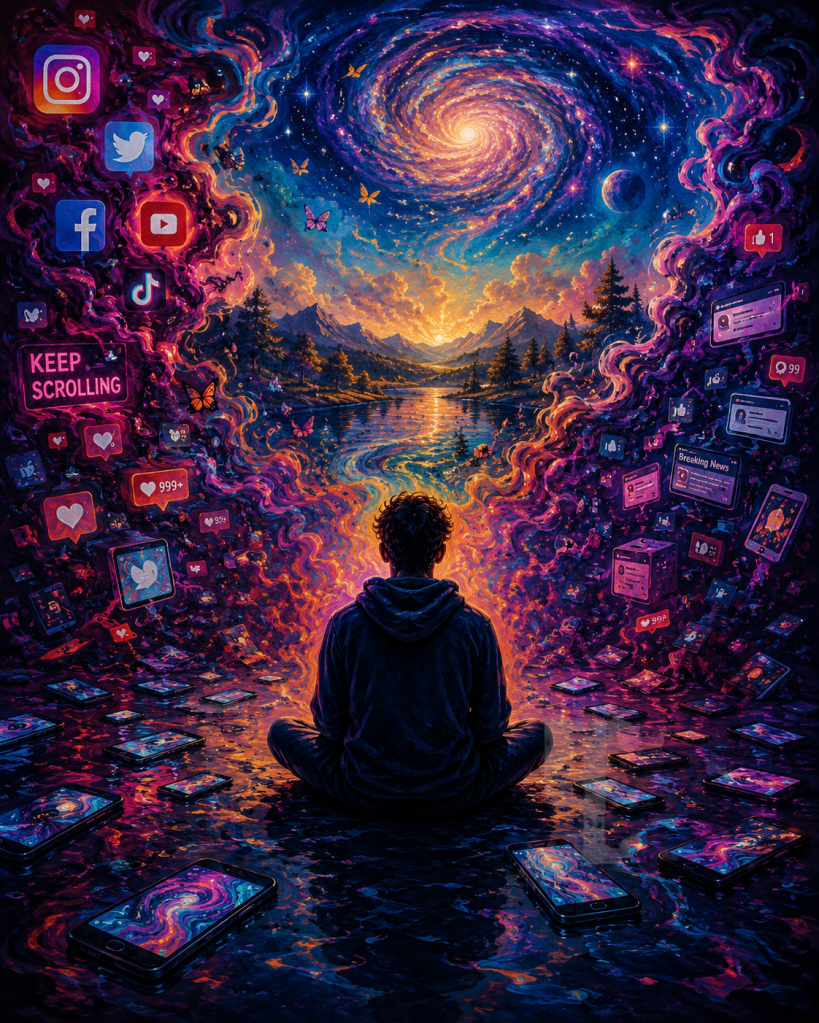
We live in a world where silence feels unnatural. The moment life slows down, people reach for something to fill the space — their phone, social media, music, television, gossip, notifications, anything. Not because they’re entertained, but because distraction has become emotional anesthesia.
Modern life rewards constant stimulation. There is always another video to watch, another opinion to absorb, another trend to chase, another notification waiting to interrupt your thoughts. People wake up and immediately consume noise before they even hear themselves think.
And after a while, many people don’t even know who they are underneath all the stimulation.
The dangerous thing about distraction is that it doesn’t always look destructive. Some distractions even look productive. Endless scrolling disguised as “research.” Constant busyness disguised as ambition. Overconsumption disguised as self-improvement.
But underneath it all is usually the same thing:
avoidance.
Because silence reveals things.
Silence reveals unresolved emotions.
Silence reveals loneliness.
Silence reveals dissatisfaction.
Silence reveals the parts of yourself you’ve been trying to outrun.
That’s why many people fear being alone with their thoughts. The moment external noise disappears, internal noise becomes louder.
For some people, distraction is easier than healing.
It’s easier to scroll than self-reflect.
Easier to stay busy than ask yourself difficult questions.
Easier to consume other people’s lives than build your own.
But eventually distraction creates a strange emptiness. You can feel it even when everything seems “fine.” Days begin blending together. Your attention span weakens. You stop feeling deeply connected to anything. Life starts feeling automatic.
You’re awake, but not fully present.
One of the biggest costs of constant distraction is that it disconnects you from your own intuition. Your inner voice becomes harder to hear when your mind is constantly crowded with external opinions and stimulation.
You stop asking:
“What do I actually want?”
And start asking:
“What should I want?”
There’s a difference.
The people who truly change their lives usually reconnect with themselves in simple ways first. They spend time alone without immediately reaching for entertainment. They walk without headphones. They journal honestly. They sit with uncomfortable emotions instead of escaping them instantly.
At first, it feels uncomfortable.
But eventually, silence stops feeling empty and starts feeling peaceful.
That’s where clarity begins.
Not in constant noise.
Not in endless stimulation.
Not in chasing dopamine every waking second.
Clarity appears when you finally give yourself enough stillness to hear your own mind again.
The truth is, most people already know what they need to do in life. They’re just too distracted to fully face it.
Your purpose, your creativity, your healing, your next chapter — none of it lives inside endless scrolling loops.
It lives underneath the noise.
And sometimes the most powerful thing you can do for yourself is disconnect long enough to remember who you were before the world told you to constantly consume instead of create.
 TheSpiritualExplorer
One response to “Most people aren’t addicted to bad habits anymore.They’re addicted to distraction.”
This is SO true – great wake up call! Thank you 🤩
LikeLike