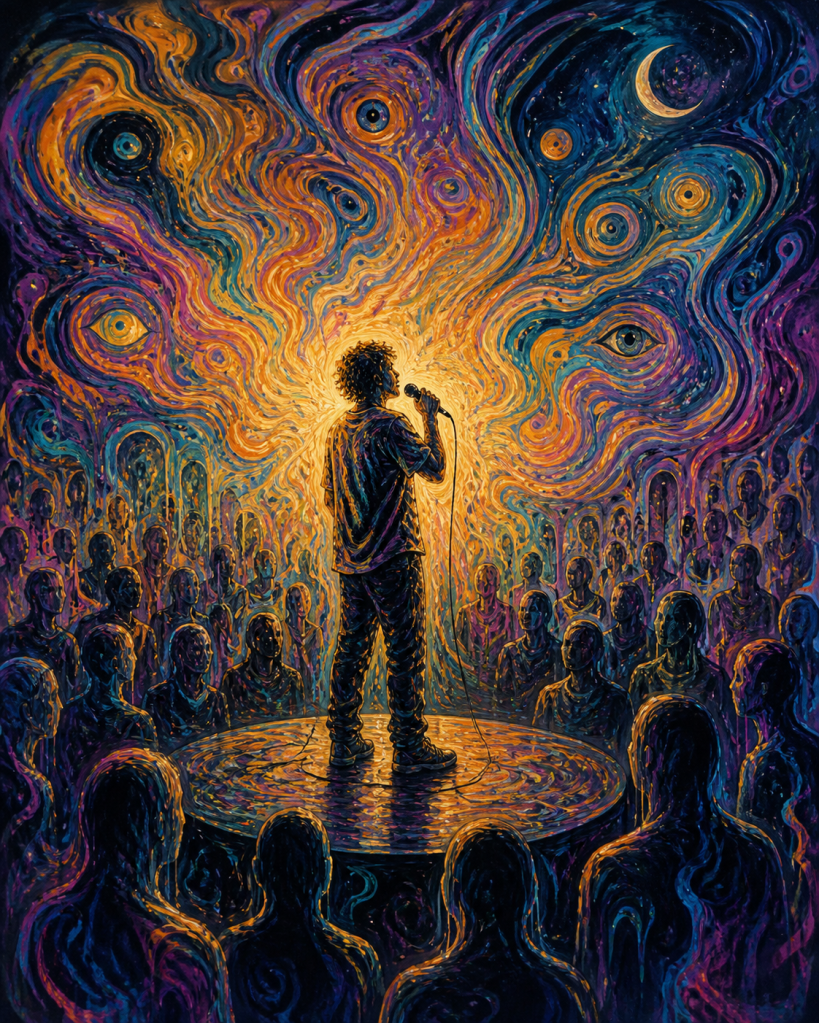
There’s a quiet pressure most people don’t talk about.
It’s not loud criticism. It’s not direct rejection.
It’s something more subtle—watching how people respond to you, and slowly adjusting yourself until you’re no longer sure what was you in the first place.
You start editing your tone.
Softening your opinions.
Holding back your ideas.
Waiting for signals that it’s “safe” to be fully yourself.
And without noticing it, you stop singing your own song.
The Trap of External Validation
Most people don’t realize how much their identity gets shaped by reaction.
A joke lands well, so you repeat that version of yourself.
A truth gets ignored or judged, so you stop saying it.
A certain personality gets more attention, so you lean into it.
Bit by bit, you stop expressing what’s real and start performing what works.
This is where people lose themselves—not in one dramatic moment, but in small compromises repeated over time.
You don’t wake up one day and decide to abandon your voice.
You slowly stop trusting it.
And the more you depend on external approval, the more fragile your identity becomes. Because now your sense of self is outsourced to people who are not responsible for holding it together.
What It Means to “Sing Your Own Song”
Singing your own song doesn’t mean being loud, rebellious, or constantly expressive.
It means something quieter and more grounded:
- You say what you actually think, not what you think will be accepted
- You act in alignment with your values, even if it doesn’t get attention
- You stop adjusting your personality just to maintain comfort in a room
- You stay consistent with yourself, even when the response is uncertain
It’s not about forcing individuality.
It’s about refusing to abandon it.
Your “song” is your natural expression—your thoughts, instincts, creativity, humor, opinions, and energy when you’re not filtering yourself for approval.
And the truth is, most people don’t lose confidence first.
They lose expression first.
Why People Stop Singing
There are a few common reasons people start silencing themselves:
1. Fear of rejection
If I fully express myself and it’s not accepted, what does that say about me?
So instead of risking rejection, people choose partial expression. Safer. Softer. Less exposed.
2. Comparison
You start believing other people’s way of being is “better” or more socially rewarded.
So you imitate instead of originate.
3. Conditioning from past reactions
Maybe you were laughed at. Ignored. Misunderstood.
So you adapt—quietly deciding that being fully yourself is not worth the cost.
Over time, these patterns don’t just change your behavior. They change your identity.
You begin to perform instead of live.
The Hidden Cost of Not Being Yourself
At first, adapting feels smart. Even strategic.
You get smoother social interactions. Less friction. More acceptance.
But something else starts to happen underneath:
You feel disconnected.
Not necessarily unhappy all the time—but slightly off. Like you’re present in your life but not fully in it.
Because when you constantly adjust yourself to fit the room, you stop feeling like the source of your own direction.
You become reactive instead of expressive.
And over time, that creates a quiet internal tension:
- You’re liked, but not fully seen
- You’re accepted, but not fully expressed
- You’re present, but not fully yourself
That gap is where frustration builds.
The Real Flex: Staying Consistent With Yourself
There’s a version of confidence that doesn’t need attention.
It’s not about proving anything. Not about dominating space. Not about being the loudest voice in the room.
It’s simpler than that.
It’s consistency.
You keep showing up as yourself, even when:
- It doesn’t get the reaction you expected
- It doesn’t instantly connect with everyone
- It feels easier to adapt than to stay grounded
That’s what most people miss: authenticity isn’t rewarded immediately.
In fact, it’s often ignored at first.
But consistency builds something that performance never can—self-trust.
And self-trust is what makes you stable when external validation disappears.
When No One Claps, Keep Going Anyway
One of the hardest parts of being authentic is silence.
Not rejection. Not criticism.
Silence.
Because silence makes you question yourself. It creates doubt. It tempts you to switch styles, change direction, or become someone more “noticeable.”
But this is the moment that defines whether you’re performing or expressing.
If you need applause to stay yourself, you’re not rooted in identity—you’re rooted in reaction.
Real expression doesn’t require immediate feedback.
A musician doesn’t stop playing because the room is quiet.
A writer doesn’t erase their voice because not everyone responds.
And a grounded person doesn’t abandon themselves because the world didn’t immediately echo back.
You keep singing your own song because it’s yours—not because it’s guaranteed to be understood right away.
Final Thought
At some point, you have to decide what matters more:
Being accepted by adjusting yourself…
or being aligned with yourself, even if it takes time for others to catch up.
There’s nothing wrong with wanting connection. That’s human.
But connection built on self-abandonment always comes at a cost.
So the real question isn’t whether people hear your song.
It’s whether you’re still willing to sing it when they don’t.
Because the moment you stop performing and start expressing, something shifts.
You stop chasing identity.
And you start living from it.