Most people think anxiety comes from bad things happening.
It doesn’t.
It comes from wanting things to happen a very specific way and quietly fearing they won’t.
The strange part is that hope and fear usually arrive as a pair. You don’t get one without the other. The more tightly you cling to a desired outcome, the more your mind starts simulating its opposite.
This is the internal loop that turns simple goals into emotional stress.
And it’s exactly what the Stoics were trying to break.
The Hidden Link Between Hope and Fear
The Roman Stoic philosopher Seneca pointed out something that still hits modern life hard: hope and fear are not opposites—they’re connected.
Hope says: this will go right.
Fear says: this will go wrong.
But both are built on the same foundation: attachment to a specific result you don’t fully control.
So when you “hope” something works out, your mind automatically begins scanning for ways it might fail. Not because you’re pessimistic, but because expectation always creates vulnerability.
You don’t just want the outcome—you start needing it.
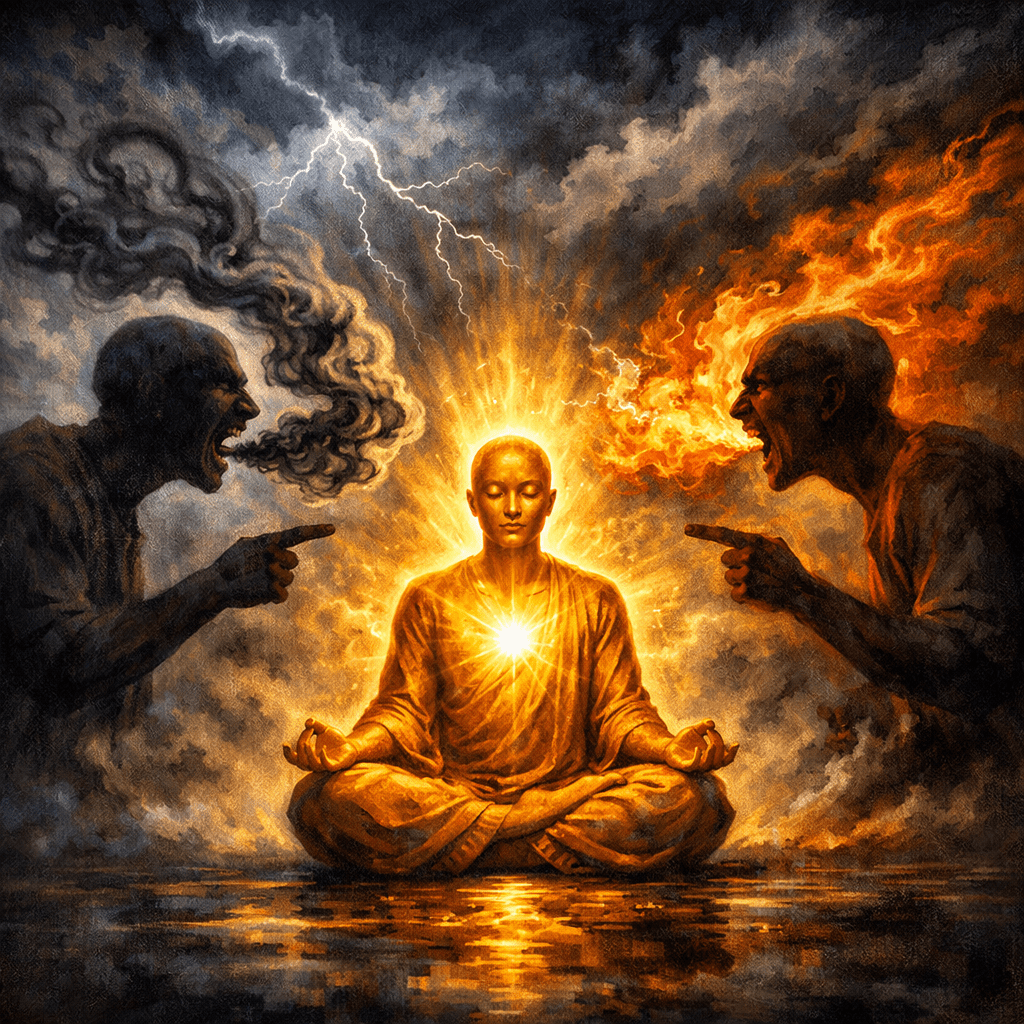
That’s where the war begins.
Why Your Mind Creates Stress From Good Goals
At first, wanting something seems harmless.
A relationship. A job opportunity. A personal goal. A certain version of your future.
But the moment your identity starts tying itself to the outcome, your emotional state becomes dependent on something external.
Now every step forward carries pressure:
- If it works out, you feel relief.
- If it doesn’t, you feel personal failure.
- Even before anything happens, you feel tension in both directions.
That’s the trap: you start living in a future that hasn’t happened yet, emotionally reacting to outcomes that don’t exist.
This is why people can be “successful” on paper but mentally exhausted.
They are constantly negotiating with possibilities.
The Illusion of Control
Most anxiety isn’t about danger—it’s about control.
We convince ourselves that if we think hard enough, plan well enough, or worry enough, we can influence outcomes that are actually only partially in our hands.
But life doesn’t respond to internal rehearsal. It responds to action and randomness together.
The problem is not that you care. The problem is that you over-assign control to things that don’t belong to you.
Once you do that, every outcome becomes personal.
And that’s exhausting.
What the Stoics Were Really Teaching
Stoicism is often misunderstood as emotional suppression or “not caring.”
That’s not it.
The core idea is actually much more practical: separate effort from outcome.
You commit fully to what you do, but you release ownership over how it lands.
That’s where mental stability comes from—not indifference, but clarity.
Seneca’s insight about hope and fear is really pointing to this:
If you are emotionally invested in a specific future result, you are automatically signing up for its opposite possibility.
You can’t have one without the other.
So the goal isn’t to eliminate hope.
It’s to remove dependency.
Living Without the Constant Push and Pull
When people first hear this idea, they often assume it means lowering ambition. But it’s actually the opposite.
You can still:
- Set goals
- Want better outcomes
- Care deeply about your life
But you change the position you stand in mentally.
Instead of:
“I need this to happen for me to be okay”
It becomes:
“I will act fully, regardless of how it unfolds”
That shift removes the emotional swing between hope and fear.
You still care—but you’re no longer mentally hostage to the result.
The Real Source of Peace
Peace doesn’t come from getting everything you want.
It comes from no longer negotiating your emotional state with the future.
When hope is detached from fear, it stops feeling like pressure and starts feeling like direction.
You still move forward, but without the constant background noise of “what if this fails?” or “what if I lose this?”
You stop rehearsing outcomes and start living actions.
And ironically, that’s often when things work out better anyway—because you’re no longer acting from tension.
A Simple Way to Practice This
You don’t need a philosophy degree to apply this.
Start here:
When you notice yourself worrying about an outcome, ask:
- What part of this is actually in my control right now?
- Am I focused on action, or on prediction?
- If this doesn’t go my way, what would I still be able to do next?
That last question is key.
It pulls your mind out of future fantasy loops and back into present capability.
Because the only real stability you have is what you can still do, regardless of outcome.
Closing Thought
Hope and fear feel like emotional opposites, but they are built from the same mental habit: attachment to outcomes you don’t control.
The more tightly you grip one, the more you feel the shadow of the other.
The Stoic approach isn’t to stop wanting things.
It’s to stop letting what you want control how you feel.
When you remove that dependency, something interesting happens.
You don’t become less motivated.
You become less divided.
And that internal war—between hoping things go right and fearing they won’t—finally starts to quiet down.