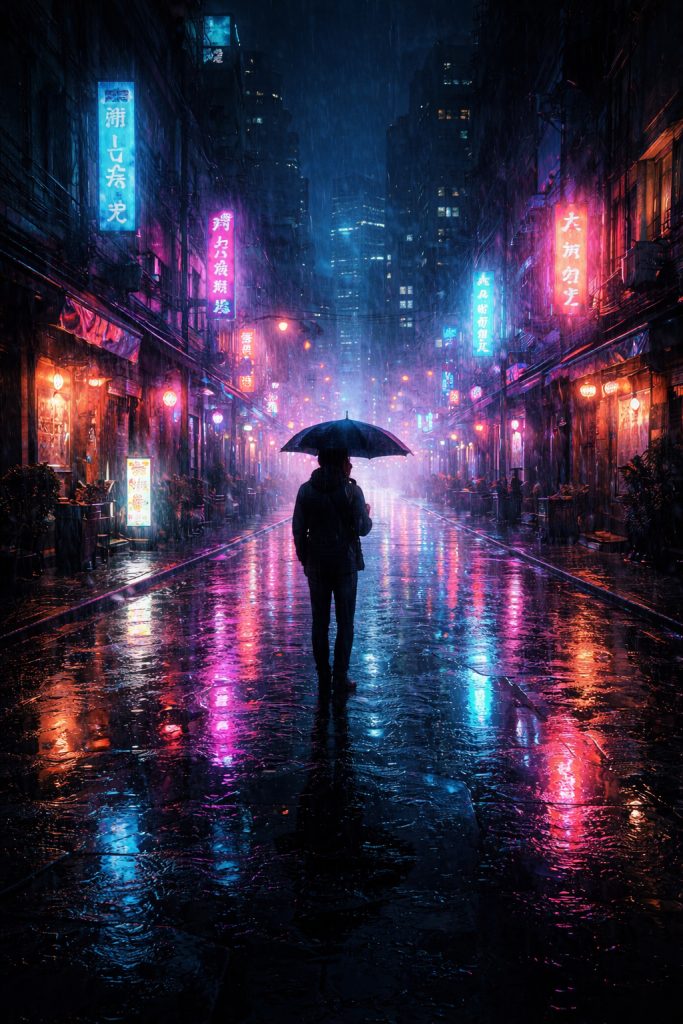
There’s something about rainy streets, dimly lit rooms, neon reflections on wet pavement, and quiet nighttime solitude that just hits differently. It’s not just a style—it’s a feeling. A mood. A mental space people keep returning to without always knowing why.
Moody aesthetics aren’t random. They show up in playlists, wallpapers, clothing styles, photography, films, and even the way people decorate their rooms. And despite being visually “dark,” they often create a sense of calm, comfort, and emotional clarity.
So why are so many people drawn to them?
What Makes an Aesthetic “Moody”?
A moody aesthetic usually blends a few key elements:
- Low lighting or soft shadows
- Cool or muted color palettes (blues, blacks, purples, grays)
- Rain, fog, or nighttime environments
- Urban solitude (empty streets, glowing windows, quiet cities)
- A sense of stillness or emotional depth
It’s not just about darkness—it’s about atmosphere. A moody scene feels like it has weight to it, like it’s holding a moment in time a little longer than usual.
Where bright, high-energy visuals push stimulation, moody aesthetics slow everything down.
The Emotional Pull Behind It
At first glance, you might think dark aesthetics would feel depressing. But for many people, it’s actually the opposite.
One of the biggest reasons people are drawn to this vibe is emotional comfort. Moody visuals create space to think. They don’t demand attention—they invite reflection.
In a world that’s constantly loud, bright, and fast-moving, darker aesthetics can feel like a pause button.
There’s also a kind of emotional honesty in them. Bright aesthetics often feel like celebration, energy, or performance. Moody aesthetics feel more internal—closer to thoughts you don’t always say out loud.
That makes them feel real.
Calm in Overstimulation
Modern life is visually and mentally overloaded. Constant notifications, fast content, and bright screens train the brain to stay alert all the time.
Moody aesthetics do the opposite.
They reduce stimulation instead of increasing it. The brain doesn’t have to “react” as much—it can settle. That’s part of why rainy nights, dim rooms, and quiet streets can feel strangely peaceful even if nothing “exciting” is happening.
It’s not boredom. It’s relief.
For some people, these environments create a sense of emotional shelter. Like stepping out of noise and into something slower and more grounded.
Why Music and Mood Go Hand in Hand
Moody aesthetics rarely exist alone. They’re almost always paired with music—lo-fi beats, ambient sounds, slowed tracks, or emotional instrumentals.
That combination matters.
Sound reinforces the feeling the visuals create. A dimly lit room with rain outside feels different depending on what you’re listening to. Add a soft, repetitive beat or distant echoing sound, and suddenly the whole experience becomes immersive.
It’s not just watching a mood—it’s stepping into it.
That’s why so many people build playlists around specific vibes like “rainy night drive,” “3AM thoughts,” or “lonely city walk.” The aesthetic becomes something you can live inside.
The Rise of Moody Aesthetics Online
Moody visuals have always existed in art and film, but they’ve exploded online in recent years.
Part of that comes from how people use social media now. Instead of only sharing highlights, many people use aesthetics to express internal states—especially ones that are harder to put into words.
A moody image can communicate things like:
- quiet loneliness
- reflection
- nostalgia
- calm sadness
- peaceful isolation
It gives shape to feelings that are otherwise hard to explain.
There’s also a strong influence from film, photography, and digital art communities that have embraced darker tones as a form of storytelling rather than decoration.
Creating the Mood for Yourself
You don’t need a city skyline or perfect rainy weather to experience this aesthetic. It’s more about shaping your environment intentionally.
A few simple ways people recreate the vibe:
- Lowering harsh lighting and using warm lamps or LEDs
- Listening to ambient or slow music
- Cleaning visual clutter in their space
- Watching rain videos or nighttime city loops
- Spending quiet time without distractions
It’s less about copying a look and more about creating a feeling of stillness.
The goal isn’t to make everything dark—it’s to make it calm.
Why It Sticks With Us
At its core, the appeal of moody aesthetics comes down to contrast.
Life is often busy, bright, and overwhelming. So when something slows it down—even visually—it stands out. It gives the mind permission to rest without demanding anything in return.
That’s why people don’t just like moody aesthetics—they return to them.
They’re not just images or styles. They’re a state of mind. A quiet corner in a loud world. And sometimes, that’s exactly what people are looking for without even realizing it.