There’s a version of your city that most people never experience.
It doesn’t show up on postcards or social media feeds. It doesn’t exist during rush hour or under the noise of daily routines. You only find it when the clock drifts past midnight and the world begins to quiet down.
At 3AM, everything changes.
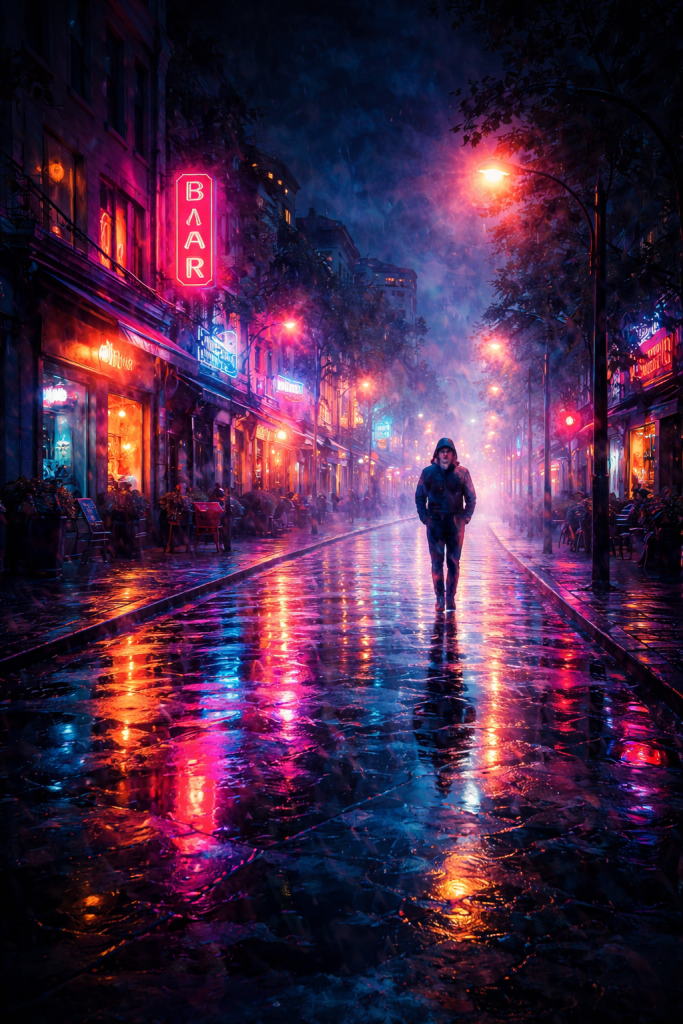
The streets that were once packed with movement become stretched and still. Traffic lights cycle through colors for no one. Storefronts sit dark, and the usual chaos of the day dissolves into something slower, almost cinematic. It’s not just quieter—it feels like you’ve stepped into a completely different reality.
And the truth is, you have.
Because the people who exist in this version of the city are different.
Nighttime belongs to a unique mix of individuals—late-shift workers heading home, artists chasing inspiration, insomniacs walking off restless thoughts, and those who simply feel more alive when the world goes still. There’s an unspoken understanding among them. No one’s in a rush. No one expects anything from you. You just exist in the same space, briefly sharing this quieter version of life.
There are also unwritten rules.
Eye contact means more at night, but so does respecting distance. Awareness heightens. You notice footsteps, shadows, the hum of distant sounds. It’s not necessarily fear—it’s alertness. Your senses sharpen in a way they don’t during the day. You become more present, more aware of your surroundings and yourself.
But beyond that heightened awareness, there’s something unexpectedly beautiful about it.
Empty streets reflect neon lights in a way that feels almost surreal. Buildings seem taller. The air feels different—cooler, calmer, like the city is finally exhaling after holding its breath all day. Without the distractions of noise and crowds, you start to notice the details: the flicker of a streetlamp, the echo of your own footsteps, the way silence can actually feel full.
For some people, nighttime isn’t just a time—it’s a mindset.
It’s when thoughts get clearer. When creativity flows easier. When the pressure to perform or keep up disappears. The world feels less demanding, and in that space, you can think, reflect, or just be without interruption. There’s a certain freedom in knowing that while most of the world sleeps, you’re experiencing something they’re not.
Of course, not everyone feels comfortable in it. For some, the quiet turns into unease. The lack of activity feels unnatural, even unsettling. And that contrast is what makes nighttime so interesting—it amplifies whatever you bring into it. Peace becomes more peaceful. Loneliness becomes more noticeable. Clarity becomes sharper.
That’s why the city at night isn’t just a setting—it’s an experience.
Daytime is structured, predictable, and shared by everyone. Nighttime is personal. It reveals a different side of the same place, shaped by fewer people, less noise, and more space to feel and think.
Two worlds. Same city.
Most people only ever see one.
 TheSpiritualExplorer