Have you ever noticed how a song you’ve heard hundreds of times suddenly feels completely different when life throws you a curveball? That upbeat anthem you once danced to might now feel like it’s telling your story, or a melancholic ballad you ignored for years suddenly pierces straight to your soul. Music has a mysterious way of amplifying emotions, especially during times of personal struggle. But why does it hit harder when you’re going through something, and why do we turn to it instinctively for comfort, release, or even guidance?
The Emotional Science Behind Music
Music is more than entertainment—it’s a powerful emotional trigger. Neurological studies show that when we listen to music, our brains release dopamine, the “feel-good” chemical. But here’s the fascinating part: dopamine levels spike even higher when the music resonates with our emotional state. In other words, our brains are hardwired to respond more intensely to songs that match the feelings we’re experiencing.
When you’re sad, anxious, or heartbroken, a song that echoes that mood activates areas of the brain linked to emotion and memory. It’s why a single lyric can make you tear up or feel deeply understood. Music becomes a mirror of your internal world.
Music as Therapy During Life’s Struggles
For centuries, humans have used music as a form of healing. From tribal drums to orchestral compositions, people have relied on rhythm, melody, and harmony to process intense emotions. Today, the practice continues in subtle but profound ways:
- Heartbreak and loss: Songs about lost love or longing can validate your grief, making it easier to accept and release.
- Stress and anxiety: Calm, ambient music can slow your heartbeat and relax your nervous system.
- Motivation during challenges: High-energy tracks can help you push through workouts, work, or personal projects.
When you’re going through something, music doesn’t just entertain; it guides you through emotional terrain you might not otherwise navigate. It’s a personal therapist that’s always available.
Why We Attach Memories to Songs
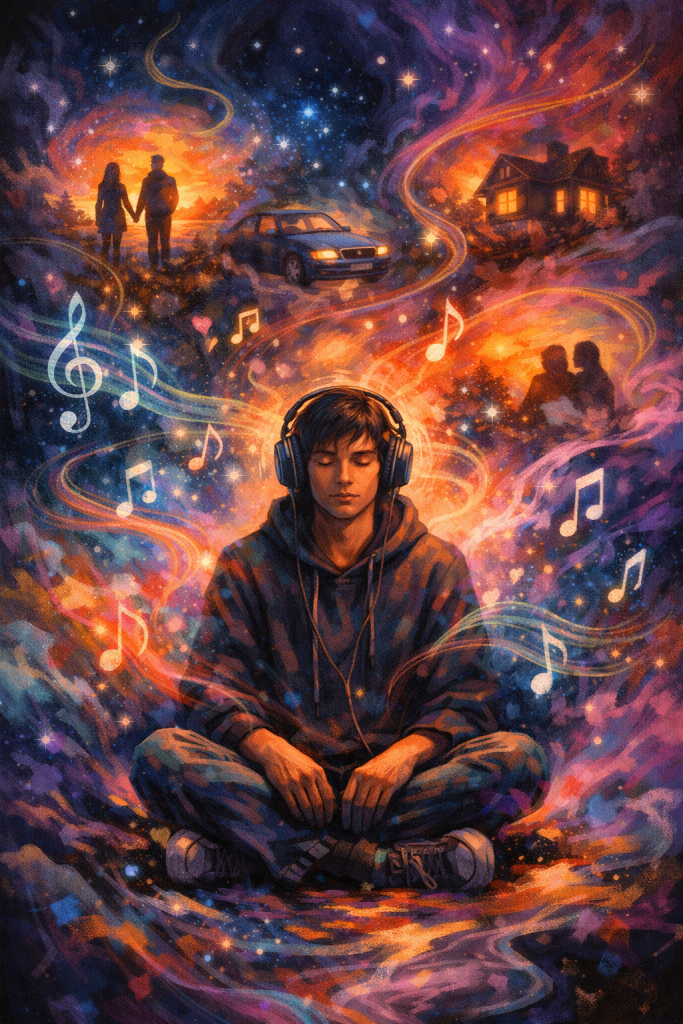
Another reason music hits harder during difficult times is its uncanny ability to attach itself to memories. Our brains form strong emotional associations with music. That song that was playing the day you moved out of your first apartment, or the melody that blared while your world fell apart, becomes a timestamp in your mind.
Later, hearing the same song can transport you back to that exact moment, making the emotions feel fresh and real. This is why revisiting old playlists can be both comforting and overwhelming—because music doesn’t just evoke feelings; it resurrects entire experiences.
Building a Personal Soundtrack for Healing
Understanding music’s emotional power opens the door to using it intentionally. You can create a personal soundtrack that supports your mental and emotional well-being. Here’s how:
- Identify your mood: Are you processing grief, stress, or uncertainty? Recognize your emotional state before hitting play.
- Select songs that resonate: Choose tracks that echo your feelings, not necessarily ones that cheer you up immediately. Sometimes catharsis is more powerful than distraction.
- Allow yourself to feel: Cry, sing along, or just sit in silence with the music. Don’t fight the emotions; let them move through you.
- Mix it up: Add songs that inspire hope or motivation gradually. Music can help you move from processing to healing.
- Reflect: After listening, journal or meditate on the thoughts and feelings that surfaced. Music can be a bridge to self-awareness.
Music Connects Us When Words Fail
One of the most powerful aspects of music is that it expresses what words often cannot. When you’re going through something, it’s common to feel isolated or misunderstood. Music becomes a universal language that speaks directly to the heart. That lyric you relate to, that chord progression that sends shivers down your spine, is a reminder that your experience, though deeply personal, is shared by millions.
In a way, music is a quiet companion during the chaos. It validates your emotions, mirrors your journey, and helps you feel seen—even when no one else is around to notice.
Conclusion: Let Music Carry You Through
Music doesn’t just “hit harder” when you’re going through something—it transforms. It turns a melody into empathy, a lyric into insight, and a rhythm into courage. The next time life throws you a challenge, don’t just reach for music to pass the time. Let it guide you. Let it soothe you. Let it make you feel, remember, and ultimately, heal.
Music is not just sound. It’s emotion, memory, and life itself. And when you’re in the thick of it, a single song can remind you that you’re never truly alone.
 TheSpiritualExplorer