There are moments when language fails us. When the pain is too layered, the memories too tangled, or the emotions too contradictory to line up neatly into sentences. In those moments, we don’t need better words—we need a different outlet. This is where creativity quietly steps in, not as a hobby or a talent, but as a lifeline.
Creativity doesn’t ask you to explain yourself. It doesn’t demand coherence or clarity. It simply asks you to show up and move something—your hands, your breath, your attention. And in doing so, it often becomes therapy long before we realize that’s what’s happening.
Creating When Words Fail
There’s a reason people instinctively reach for music, drawing, journaling, or movement during emotional upheaval. Before we intellectualize our pain, we feel it. Creativity meets us at that raw, pre-verbal level.
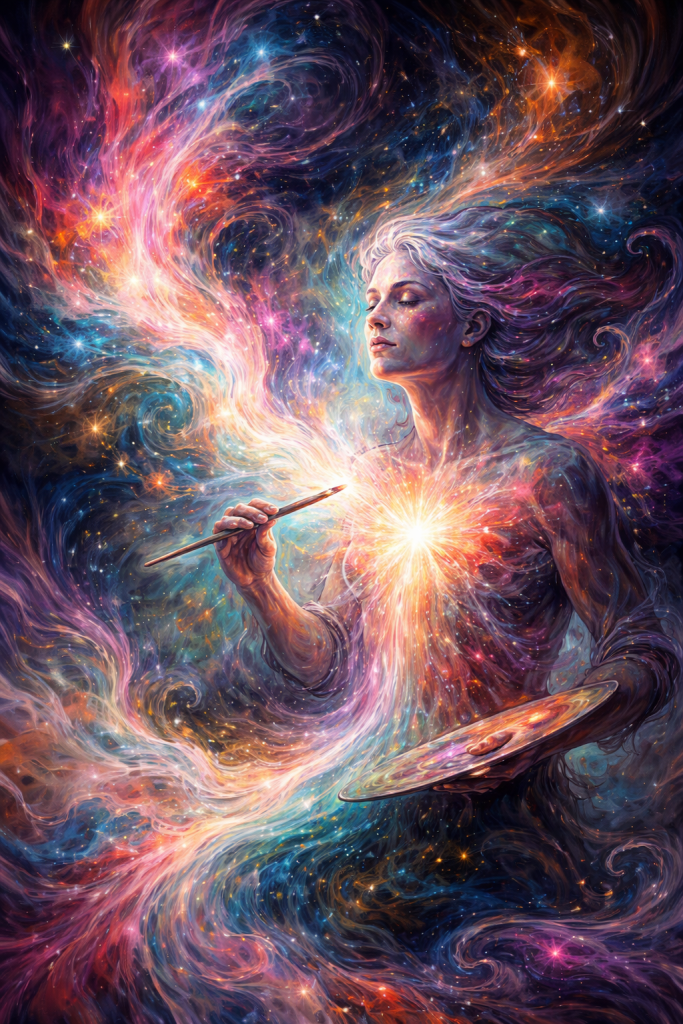
You don’t need to know why you’re sad to smear paint across a canvas. You don’t need to organize your grief to write a poem that makes no sense to anyone but you. In fact, the power of creative expression often lies in its refusal to be neat or linear. It allows contradictions to coexist—love and anger, relief and loss, hope and exhaustion.
In therapy, we’re often encouraged to name our feelings. Creativity lets us feel them without naming them at all.
The Emotional Science Behind Creative Release
On a nervous system level, creativity is regulation. When you’re creating, your brain shifts away from constant threat scanning and into a state of focused engagement. This doesn’t erase pain, but it gives it somewhere to go.
Art, music, and writing activate parts of the brain connected to memory, emotion, and sensory processing. This is why creating can feel exhausting and relieving at the same time. You’re not avoiding the emotion—you’re metabolizing it.
This is also why many people feel a strange calm after creating something intense. The emotion hasn’t disappeared; it’s been moved. Energy that was stuck has been expressed.
Art as a Mirror for the Subconscious
Often, we don’t understand what we’re working through until we see it outside of ourselves. Creativity externalizes the internal. It turns vague emotional weight into something visible, audible, or tangible.
You might finish a piece of writing and realize, Oh. That’s what I’ve been grieving.
You might look at a drawing and see anger you didn’t know you were carrying.
You might hear a song you made and recognize longing, fear, or relief woven into it.
Art becomes a mirror, not always flattering, but always honest. And unlike self-criticism, it doesn’t shame you for what it reveals. It simply reflects.
Why Imperfect Creation Heals More Than Polished Work
There’s a common trap in creativity: trying to make it “good.” But healing doesn’t happen in perfection—it happens in permission.
When creativity becomes about outcome, validation, or productivity, it loses its therapeutic edge. The most healing creative acts are often messy, repetitive, and never meant to be shared. They’re raw. Unrefined. Sometimes ugly. And that’s exactly why they work.
Perfection is a form of control. Healing requires surrender.
When you allow yourself to create without correcting, editing, or judging, you give your nervous system a rare message: I am safe to exist as I am.
Turning Creativity Into a Personal Therapy Practice
You don’t need formal rules, but rituals help. Small, repeatable actions signal safety and intention.
This might look like:
- Writing for ten minutes without rereading
- Drawing with your non-dominant hand
- Creating to music that matches your mood
- Making art in the dark or with your eyes closed
- Destroying or deleting what you create afterward
The goal isn’t to keep something—it’s to release something.
Over time, these practices become a dialogue between you and your inner world. You begin to trust that when something surfaces, you have a way to hold it.
When Therapy Starts to Look Like Art
Interestingly, the longer you engage with creativity as a healing tool, the more therapy itself begins to feel creative. Sessions become less about “fixing” and more about exploring. Insights arrive not as answers, but as images, metaphors, or sensations.
You start noticing patterns. Themes. Symbols. Your inner world develops a language that isn’t strictly verbal, but deeply meaningful.
This is where therapy and art blur into the same thing: a process of witnessing yourself without judgment.
Letting Art Exist Without Monetizing It
In a world that pushes us to brand everything we do, it’s radical to let art exist solely for survival. Not every creation needs an audience. Not every skill needs to become income.
Some art is sacred because it is private. Some creativity exists only to help you make it through a day, a season, or a loss.
When you release the pressure to produce, you reclaim creativity as a human need, not a performance.
Creating to Stay Alive
At its core, creativity as therapy is about relationship—your relationship with yourself. It’s about giving your inner experience a place to land, especially when life feels overwhelming or incoherent.
You don’t have to be an artist. You don’t have to be consistent. You don’t have to be good.
You only have to be honest.
And sometimes, that honesty doesn’t come in sentences. It comes in color, rhythm, movement, or silence. That is where healing often begins—quietly, imperfectly, and exactly as it needs to.
 TheSpiritualExplorer