There was a time when noise felt like life. Crowded rooms, loud laughter, packed calendars, constant movement. Being surrounded by people felt like proof that we were living fully, that we belonged, that we mattered. Silence, back then, felt empty—almost threatening. To be alone was to miss out.
But something changes as you get older.
Not all at once. Not dramatically. It’s subtle. You start leaving events earlier. You feel drained instead of energized after social gatherings. Your phone stays unanswered a little longer—not because you’re busy, but because you’re tired in a way sleep doesn’t fix. Slowly, you begin to realize that it’s not people you’re avoiding. It’s noise. It’s chaos. It’s anything that costs you your peace.
The Shift From Noise to Meaning
With age comes a deeper awareness of energy—your own and everyone else’s. You start to notice how certain conversations leave you anxious, heavy, or restless, while others make you feel calm, grounded, and understood. You realize that not all company is equal. Some connections nourish you. Others consume you.
When you’re younger, social life is often driven by validation. Being invited means you’re wanted. Being seen means you’re important. Crowds feel like belonging. But over time, you learn that proximity is not connection. Being surrounded does not mean being understood. And being busy does not mean being fulfilled.
Meaning replaces noise. Depth replaces volume. Peace becomes more valuable than popularity.
Why Crowds Start to Feel Heavy
Crowds require performance. They demand attention, reactions, energy. You have to talk, explain, laugh at the right moments, mask your exhaustion, manage impressions. And eventually, you get tired of performing versions of yourself that don’t feel real anymore.
As you mature, authenticity becomes non-negotiable. You no longer want to shrink, exaggerate, or edit yourself just to fit into spaces that don’t feel aligned. The older you get, the less tolerance you have for shallow exchanges and unspoken tension. You crave presence, not spectacle.
It’s not that you dislike people. It’s that you’ve learned how precious your inner world is.
People Who Feel Like Home
At some point, you stop asking, “Who’s going to be there?” and start asking, “How will I feel after?” That question changes everything.
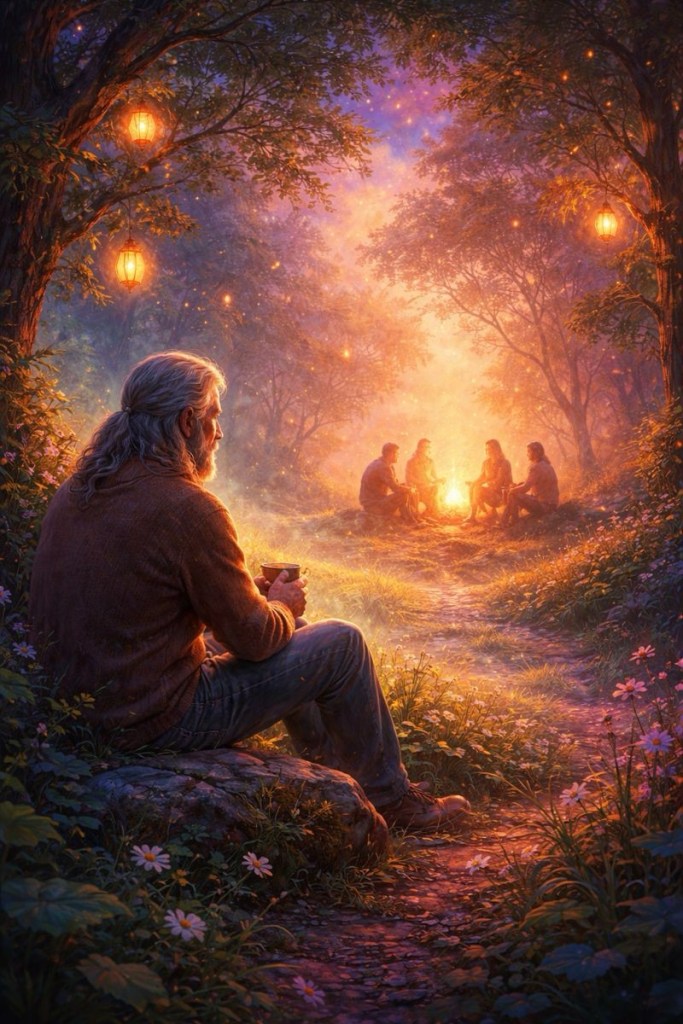
You begin to choose people who feel like home—those whose presence doesn’t require armor. The ones who don’t drain you with drama or competition. The ones you can sit in silence with and still feel connected. These are people who are good for your mind, gentle with your heart, and healing for your soul.
They don’t need constant interaction to stay close. There’s no pressure to impress. No fear of being misunderstood. Just safety.
And the circle gets smaller. Much smaller. But it gets real.
Emotional Maturity and Selective Connection
This shift isn’t loneliness—it’s emotional maturity. You’re no longer willing to sacrifice your mental health for social acceptance. You understand that peace is not boring; it’s regulated. Calm is not emptiness; it’s balance.
Psychologically, this makes sense. As we age, we become more aware of stress responses, emotional triggers, and burnout. Loud environments, superficial interactions, and unresolved conflict take a greater toll on the nervous system. Choosing fewer, deeper relationships is a form of self-preservation.
You’re not isolating. You’re protecting.
Outgrowing People Without Resentment
One of the hardest parts of this transition is realizing that not everyone is meant to come with you. Some people were right for a season when you needed distraction, validation, or growth through contrast. But seasons end.
Outgrowing relationships doesn’t mean you failed or that they did. It means you changed. It means your needs evolved. And that’s allowed.
Letting go doesn’t always involve confrontation. Sometimes it’s quiet distance. Fewer replies. Less effort. Not out of spite, but out of honesty. You stop forcing connections that no longer fit who you are becoming.
And you release the guilt that comes with choosing yourself.
Peace as a Form of Self-Respect
Choosing peace is an act of self-respect. It’s saying, “My energy matters.” It’s acknowledging that you don’t need to be everywhere, with everyone, doing everything to live a meaningful life.
A peaceful life might look quiet from the outside—fewer plans, fewer faces, fewer distractions. But internally, it’s rich. It’s stable. It’s deeply fulfilling.
You learn that happiness doesn’t come from constant stimulation. It comes from alignment. From being where you feel safe, seen, and at ease.
Aging Isn’t Loss—It’s Refinement
Getting older isn’t about losing your social life. It’s about refining it. It’s about choosing quality over quantity, depth over appearance, truth over approval.
You don’t stop loving people. You just love yourself enough to stop accepting what costs you your peace.
And one day, you realize something beautiful:
The quieter your world becomes, the louder your inner voice grows.
And for the first time, you’re finally listening.
 TheSpiritualExplorer