“We are all one. Only egos, beliefs, & fears separate us.”
— Nikola Tesla
There is a quiet truth hidden beneath the noise of the world—one that humanity has touched again and again, only to forget it just as quickly. Beneath our names, labels, histories, and opinions, there exists something shared. Something whole. Something unified.
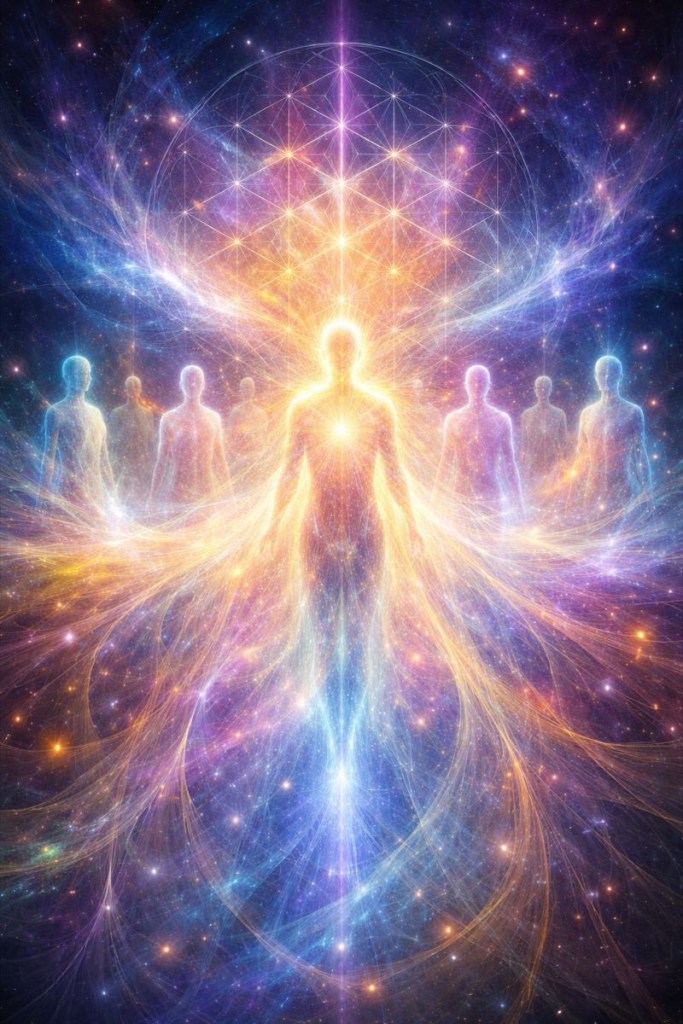
We are all one.
And yet, if you look around, separation seems to define modern life. Nations clash. Ideologies collide. People retreat into tribes of belief, convinced that difference is danger. The question isn’t whether unity exists—it’s why it feels so distant.
The answer lies in three powerful forces: ego, belief, and fear.
The Ego: The Architect of Division
The ego is not inherently evil. It forms early, as a survival mechanism—an identity stitched together from experiences, praise, pain, and protection. The problem begins when the ego forgets its role as a tool and crowns itself as the truth.
Ego thrives on contrast.
“I am right because you are wrong.”
“I matter more because I have more.”
“I belong because you don’t.”
Through ego, identity becomes rigid. We defend our opinions as if they are our bodies. A challenge to belief feels like a threat to existence. Conversations turn into battlegrounds, not bridges.
When ego dominates, unity feels dangerous—because unity dissolves the illusion of specialness. And ego will do anything to survive, even if it means convincing us that separation is natural.
Beliefs: The Inherited Filters of Reality
Beliefs are rarely chosen. Most are inherited—absorbed from parents, culture, religion, trauma, and environment. By the time we are old enough to question them, they already feel like facts.
Beliefs shape how we see the world, but they are not the world itself.
Two people can witness the same event and walk away with entirely different truths. Not because reality changed—but because perception did.
Beliefs can unite, but they can also divide. When beliefs harden into absolutes, curiosity dies. Dialogue collapses. Humanity is reduced to categories rather than souls.
The moment a belief becomes more important than compassion, separation is inevitable.
Fear: The True Divider
At the root of ego and belief lies fear.
Fear of being wrong.
Fear of being rejected.
Fear of losing control.
Fear of not belonging.
Fear narrows perception. It convinces us that safety exists only in sameness. That difference is a threat. That openness is weakness.
But fear does not protect truth—it protects illusion.
When fear loosens its grip, something remarkable happens. We listen more. We react less. We recognize ourselves in others, even when we disagree. Fear is the wall. Awareness is the doorway.
Science, Spirit, and the Idea of Oneness
Nikola Tesla understood something far ahead of his time—that everything is energy, vibration, and frequency. Modern physics now echoes what ancient spiritual traditions have always known: separation is not fundamental. It is perceived.
At the smallest levels of reality, there are no solid boundaries. Everything is interconnected. Everything influences everything else.
What we call “self” is not isolated—it is entangled.
Across Buddhism, Hinduism, Indigenous wisdom, and mysticism, the same truth appears: the illusion of separateness is the root of suffering. When we believe we are alone, we act from fear. When we remember we are connected, we act from love.
What Happens When Ego Softens
When ego loosens its grip, we don’t lose ourselves—we find ourselves.
We stop needing to dominate conversations.
We stop measuring worth through comparison.
We stop turning disagreement into hostility.
Empathy grows naturally. Not as an effort, but as a recognition. You begin to feel others rather than evaluate them. Conflict loses its intensity because it no longer threatens identity.
Unity doesn’t mean sameness. It means understanding that difference exists within a shared whole.
Living From Oneness in a Divided World
Living from oneness doesn’t require abandoning beliefs or individuality. It requires awareness.
- Pause before reacting.
- Listen to understand, not to respond.
- Question whether the ego is speaking—or the heart.
It means choosing curiosity over judgment. Presence over pride. Connection over correctness.
In a world addicted to being right, choosing understanding is a quiet revolution.
A Final Reflection
Separation is not our natural state—it is a learned one. And anything learned can be unlearned.
When we look past ego, soften beliefs, and face fear with awareness, the illusion dissolves. What remains is something ancient and familiar.
Not agreement.
Not uniformity.
But recognition.
You in me.
Me in you.
Different expressions of the same whole.
We are not divided by nature.
We are divided by forgetting.
And remembering may be the most important work we ever do.
 TheSpiritualExplorer