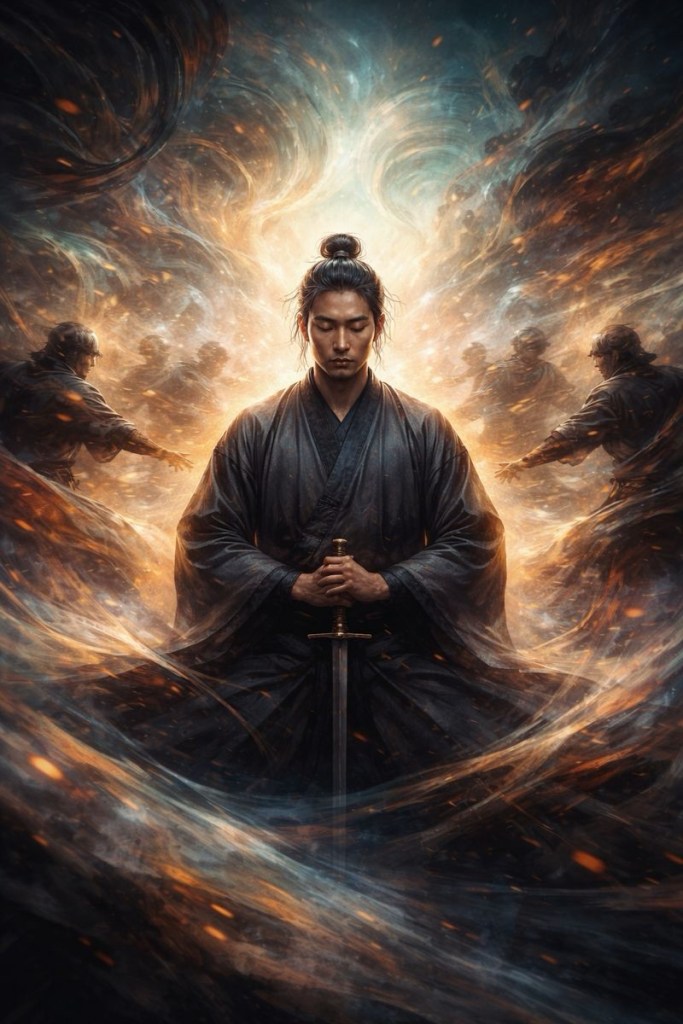
There is a persistent myth in modern culture that intensity equals strength—that the loudest voice, the angriest reaction, or the most aggressive response is what leads to victory. History, however, tells a different story. As Sun Tzu observed long ago, “It is the unemotional, reserved, calm, detached warrior who wins, not the hothead seeking vengeance and not the ambitious seeker of fortune.” This insight is not confined to battlefields; it applies just as powerfully to everyday life.
The hotheaded approach feels justified in the moment. Anger creates the illusion of clarity and purpose, as if emotional fire sharpens our instincts. In reality, it narrows perception. When emotions take control, judgment weakens, timing falters, and decisions become reactive rather than intentional. The calm warrior, by contrast, sees the full landscape. Detachment allows space to observe, assess, and act with precision rather than impulse.
Detachment is often misunderstood as coldness or indifference, but it is neither. It does not mean suppressing emotion or denying human feeling. Instead, it is the ability to experience emotion without being ruled by it. A detached mind acknowledges anger, fear, or frustration, then chooses a response instead of surrendering to reaction. This is not emotional absence; it is emotional mastery.
In daily life, this mindset becomes a powerful advantage. In conflict, the calm individual is not rushed into saying what cannot be taken back. In stressful situations, they conserve energy rather than wasting it on outrage. When setbacks occur, they adapt instead of spiraling. While others burn themselves out chasing validation, revenge, or recognition, the calm warrior remains grounded and effective.
This approach also protects inner peace. When you stop needing to prove something or punish someone, clarity replaces chaos. You begin to see that most battles are distractions, and most provocations are tests of discipline rather than threats to identity. The calm warrior does not seek to dominate others; they seek to govern themselves.
Ultimately, winning is not about overpowering the world. It is about remaining intact within it. The calm, detached warrior moves deliberately, responds thoughtfully, and acts with purpose. In a culture addicted to reaction, calm becomes a rare and decisive strength.
 TheSpiritualExplorer