“Holding onto anger is like grasping a hot coal with the intent of throwing it at someone else; you are the one who gets burned.” — Buddha
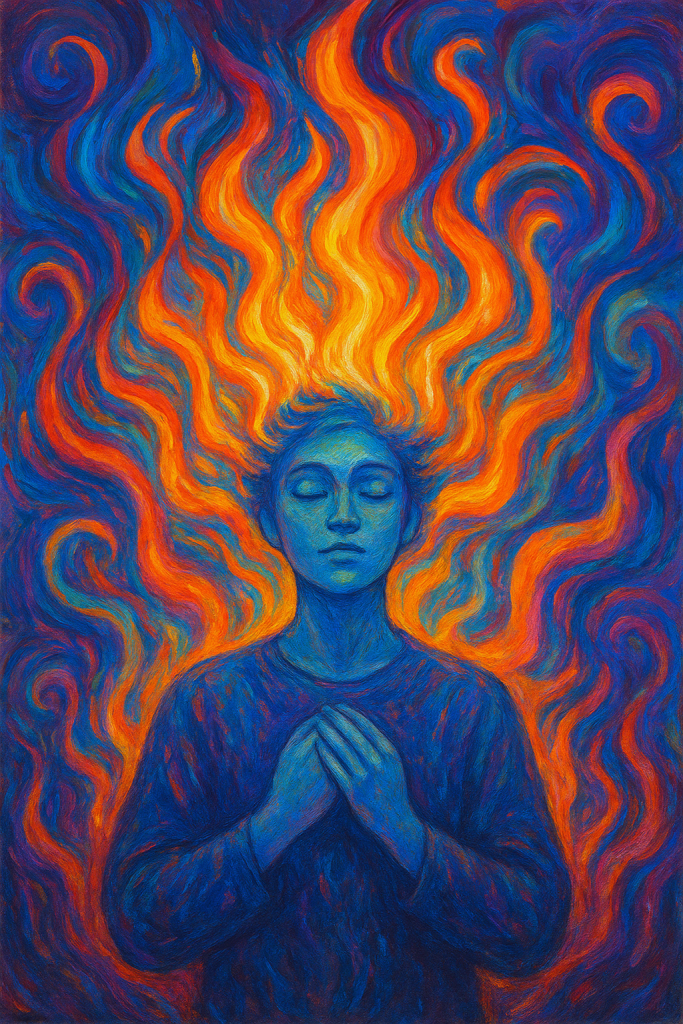
The Fire Within
Anger is one of those emotions that can feel powerful in the moment. It’s fiery, raw, and often justified — at least in our minds. When we’re hurt, disrespected, or misunderstood, anger can surge up like a defense mechanism. It feels like energy. It feels like strength. But left unchecked, it’s a flame that consumes the very person who holds it.
Alan Watts once said, “Holding any anger just burns yourself.” It’s simple yet deeply true. When we carry anger, we’re not punishing the person or situation that hurt us — we’re punishing our own peace. The fire we think will protect us ends up burning us from the inside.
1. Why Anger Feels Powerful — But Drains Energy
Anger tricks us into thinking we’re in control. It gives us a rush, a sense of certainty in moments that feel chaotic or unfair. But beneath that surface lies exhaustion.
The human body isn’t built to stay in fight mode. When we replay situations in our minds — what we should have said, how we should have been treated — our stress hormones spike again and again. We relive the pain instead of releasing it.
Eventually, that intensity turns into fatigue. Mentally, emotionally, spiritually — we get drained. The anger that once felt like protection becomes a heavy chain that limits our movement and growth.
2. The Illusion of Control
We often cling to anger because it makes us feel like we’re doing something about what happened. It feels better than sadness. Better than helplessness. But anger doesn’t give us real control — it only distracts us from what we can truly influence: our response.
When we stop feeding the fire, we begin to see clearly. Control isn’t about forcing others to understand or change; it’s about choosing how much of your peace you’re willing to give away.
When you refuse to hold anger, you’re not giving in — you’re reclaiming your energy. You’re saying, “I choose me. I choose peace over poison.”
3. How to Let Anger Pass Without Suppressing It
Letting go doesn’t mean pretending everything’s fine. It means processing emotions fully — but not letting them own you. Here are a few ways to do that:
- Acknowledge it. Don’t deny what you feel. Name it. “I’m angry because I was hurt.” Awareness begins the healing.
- Breathe through it. Deep breathing cools the body’s stress response and slows racing thoughts.
- Write it out. Journaling turns the storm in your mind into clear words on paper — giving your thoughts form and release.
- Move your body. Physical movement helps release stored tension and resets your nervous system.
- Practice forgiveness — not for them, but for your peace. Forgiveness doesn’t mean you condone what happened; it means you’re no longer letting it rule you.
You can’t heal what you refuse to feel. But once you’ve felt it, you don’t need to hold it any longer.
4. Turning Anger into Understanding
Behind every burst of anger lies something softer — pain, disappointment, fear, or unmet expectations. When you take time to look beneath the surface, you begin to see what your anger was trying to tell you.
Maybe it’s showing you a boundary that needs strengthening. Maybe it’s pointing to a part of yourself that needs love, not judgment.
Once you shift your focus from “Why did they do this to me?” to “What can I learn from this?” — the same emotion that once felt destructive becomes transformative.
5. Living Beyond the Burn
Peace isn’t the absence of anger; it’s the ability to let it pass through without staying attached to it.
You don’t need to suppress your fire — you just need to control where you let it burn. Use it to fuel creativity, motivation, and growth — not destruction.
Every time you choose calm over chaos, patience over rage, you strengthen your spirit. You teach your heart that peace is possible, even in the middle of conflict.
Closing Thought
“Peace isn’t found in the absence of anger, but in the choice to let it pass.”
You’re not meant to hold every flame life throws at you. Some are meant to light your way — others are meant to burn out and be released. The art of letting go is learning to know the difference.
 TheSpiritualExplorer