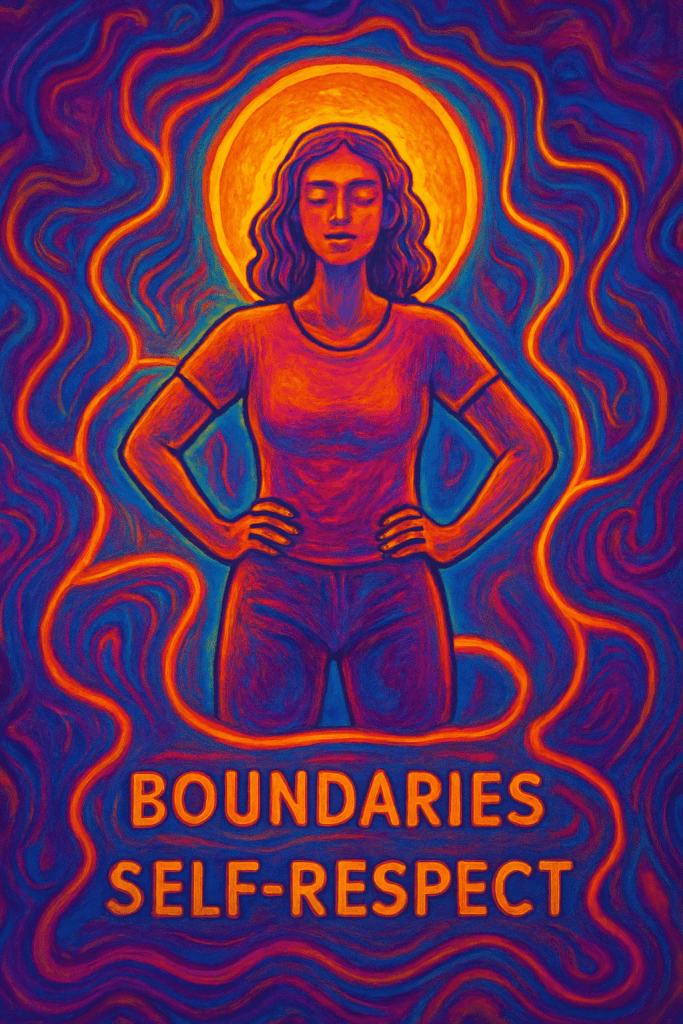
“Boundaries aren’t about keeping people out. They’re about keeping yourself safe within.”
We’ve all been there — saying yes when we wanted to say no, stretching ourselves thin just to keep the peace, and walking away from conversations feeling drained. Somewhere along the way, we were taught that setting boundaries means being difficult, cold, or selfish. But the truth is the exact opposite: boundaries are how you show love to yourself — and to others — in the healthiest way possible.
Boundaries aren’t punishments or ultimatums. They are clarity. They’re your way of saying, “This is what I need to feel respected, peaceful, and whole.” When you start honoring them, you don’t lose people — you simply begin to attract those who can meet you where you are.
Understanding What Boundaries Really Are
Let’s clear up a common misconception — boundaries aren’t walls. They don’t shut others out. They’re not about control or manipulation. Boundaries are guidelines that define how you want to be treated and what you’re willing to accept.
They come from self-awareness — from knowing what feels right and what doesn’t. If you’ve ever left a situation feeling resentful, anxious, or exhausted, that’s usually a sign that a boundary was crossed (or never set in the first place).
Healthy boundaries say:
- “I care about you, but I also care about myself.”
- “I want to help, but I can’t do it at the cost of my own peace.”
- “I love our connection, but I need time to recharge.”
You can’t pour from an empty cup. Boundaries are how you keep that cup full.
Why Saying “No” Is a Love Language
Saying “no” is one of the most powerful self-care practices there is. But many people struggle with it because they equate “no” with rejection or conflict. In reality, “no” often means yes — to your peace, your time, your healing, and your authenticity.
Think of it this way: if you constantly say “yes” to others while saying “no” to yourself, you end up betraying your own needs. Over time, that builds resentment, not love.
When you say “no” from a place of peace, not anger, you’re being honest — and honesty is the foundation of every healthy relationship. Whether it’s declining an invite you don’t feel up for, turning down extra work that drains you, or simply not engaging in an argument, your “no” can be an act of love — for yourself and the other person.
Because when your “yes” is genuine, it comes from overflow, not obligation.
Signs You Need Stronger Boundaries
If you’re unsure where your boundaries stand, take a moment to reflect on how you feel around others:
- You feel drained after certain interactions.
- You agree to things you don’t actually want to do.
- You feel responsible for other people’s emotions.
- You over-explain or justify your choices.
- You struggle to take time for yourself without guilt.
These are all signs that your energy is leaking into places it doesn’t belong. Strengthening your boundaries isn’t about becoming defensive — it’s about learning where your energy belongs and where it doesn’t.
Remember: peace isn’t found by avoiding others — it’s found by respecting your own limits.
How to Communicate Boundaries Without Conflict
Setting a boundary can feel scary, especially if you’re used to people-pleasing or avoiding confrontation. But boundaries don’t have to sound harsh. The key is calm, clear communication.
Here are a few examples:
- Instead of “Leave me alone,” say: “I need some quiet time right now, but I’ll reach out later.”
- Instead of “Stop asking me that,” say: “I’d prefer not to discuss that topic anymore.”
- Instead of “You never listen,” say: “It’s important for me to feel heard in this conversation.”
Notice the difference? The energy shifts from defensiveness to clarity. You’re not attacking — you’re expressing.
And the more you practice, the more natural it becomes. Setting a boundary might feel uncomfortable at first, but that’s only because you’re breaking a pattern. Growth often starts where discomfort lives.
Reinforcing Your Worth Through Boundaries
Every time you honor a boundary, you reinforce your self-worth. You’re telling yourself: I matter. My peace matters. My feelings matter.
It’s not always easy — some people may push back when you start saying “no.” But that’s okay. Those who truly respect you will understand, and those who don’t will reveal why your boundaries are necessary in the first place.
Holding a boundary isn’t about control; it’s about balance. It’s the space between giving and over-giving, between empathy and exhaustion, between love and self-abandonment.
When you learn to protect your peace, you don’t become less loving — you become more authentic. You give from a place of fullness, not depletion.
Closing Summary: Boundaries Are Acts of Alignment
Boundaries aren’t about cutting people off — they’re about showing up whole. They’re the bridge between who you are and who you’re becoming.
When you honor your boundaries, you’re no longer chasing validation — you’re standing in self-respect. You begin to understand that guilt is just a sign of growth. It’s the old version of you struggling to understand the new one.
So don’t fear the discomfort that comes with setting boundaries. Embrace it. It’s the sound of your soul realigning with your truth.
“The more you love yourself, the more natural boundaries become.”
 TheSpiritualExplorer